Where Faith Meets Medicine: Reclaiming Dignity Through Sacred Listening in Maharashtra

Content Warning: This article contains content that some readers may find distressing, including references to mental health challenges, trauma, and other sensitive subject matter. Please take care while reading.
Arms outstretched, eyes glazed, 15-year-old Aman could barely walk under the harsh April sun. When onlookers asked what was wrong, his mother hurriedly chimed in: “the spirit has got him.”
Sufism is a mystical and ascetic dimension within Islam emphasizing personal experiences with God. Half a mile ahead, hundreds of other devotees had congregated near the shrine of the nineteenth-century Sufi saint Sailani Baba in the Buldhana district of Maharashtra. The holy site is nestled in the mountainous Ajanta Range, nearly 350 miles from Mumbai.
“Aman needs help,” said 47-year-old psychiatrist Hamid Dabholkar as he hiked up the undulating eight-acre hilly terrain. He started Dawa-Dua, a community health program combining faith healing and medicine, in this place three years ago.
A committed rationalist and son of late anti-superstition crusader Narendra Dabholkar — who was murdered by Hindu extremists in 2013 — the younger Dabholkar sees Dawa-Dua as a way to align himself with popular religion in a non-antagonistic way. In this context, superstitions are religiously-charged beliefs that, in many instances, keep believers from seeking the medical help they may truly need.
Indian rationalism is a movement focused on debunking harmful and culturally pervasive religious superstitions, and cultivating a society that promotes a scientific temper and social justice. It stretches back centuries, and thinkers like Buddha and Charvaka contributed significantly to the philosophical traditions. Many groups and individuals in recent times have contributed to the movement in impactful ways, including the late Narendra Dabholkar.
“Many faith centers have become hotbeds of self-styled ‘godmen,’” the younger Dabholkar says. “Our work is really to help those living with mentally illness heal by learning about their own minds.” The focus is on sacred listening — on seeing the dignity, worthiness and divine within every being — and therefore resolving to help those struggling through mental illness.
At this shrine, living with mental health challenges such as psychosis, schizophrenia, anxiety, and depression brings communities of people together.
Those seeking help — some in handcuffs, others in chains linked around their bodies — can be found trying to unburden themselves. They do this by sharing their inner turmoil with local faith healers who sell peacock feathers, charms and amulets all around the eight-acre terrain to help individuals protect themselves from “negative influences.”
On their advice, patients snake through tunnels of underbush and pick lemons off the ground just to prove they are “mentally sound.” But their eyes are vacant and their bodies limp, their family members offering crutches along the way.
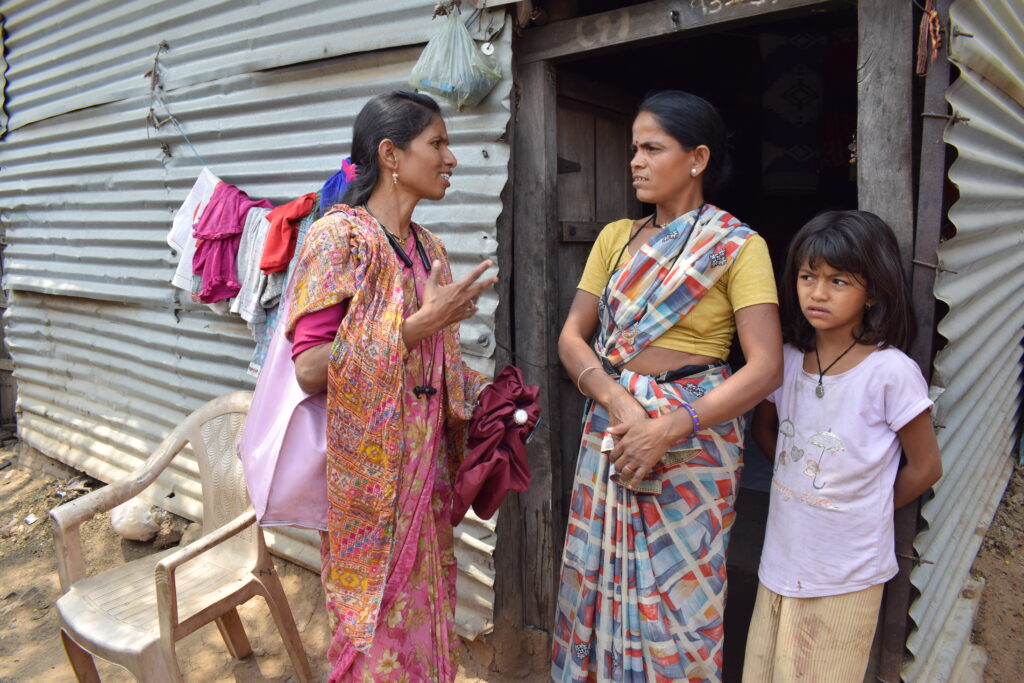
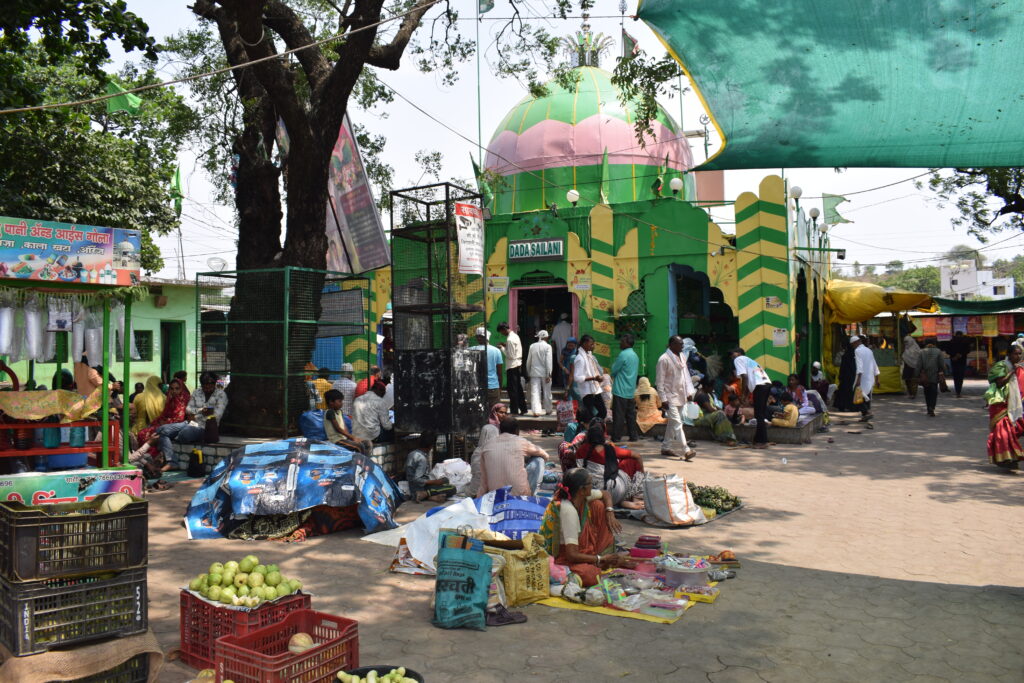
At the other end of that spectrum is Dabholkar’s program, which offers a rational-spiritual framework to cope with suffering and has helped nearly 1,000 patients here over the last three years. Aided by a resident doctor, community mental health worker and a caregiver, the psychiatrist’s team weaves in and out of dingy bylanes and slum clusters teeming with devotees that believe the saint’s prayer can alleviate suffering.
In their ramshackle huts covered by thin plastic sheets, the team practices “compassionate listening” as devotees tied up in metal chains attached to their rickety bedsteads often burst out: “only God can get the chains off.”
Antipsychotic medicines are administered to these patients, who are also offered psycho-social support and urged to visit the outpatient facility on the premises. To visitors seeking cures for mental ailments caused by “evil spirits and black magic,” the healthcare workers provide emotional first aid, in stark contrast with the faith healers who vend “specialized remedies.”
“We meet patients in their homes and at the shrine, prescribe medicines and counsel them, but we never ask them to abandon their faith in the Sufi saint,” says Sonali Patil, a cheerful community mental health worker from Buldhana.
According to folklore, Hazrat Abdul Rehman Shah, of the Naqshbandi Sufi order, had arrived in this district in the late nineteenth century and healed thousands of people possessed by djinns — spirits in Islamic mythology — and other “curses.”
At the saint’s mausoleum with its spacious courtyard, followers of all faiths from across India and abroad chant prayers while ruminatively passing rosaries. They make offerings of rose petals, prayer cloth, incense, sandalwood and sweets at his mausoleum. Often, they stay on for months or years seeking cures. The belief in the saint’s healing powers, especially for mental ailments, is so strong that over time followers have refrained from any medical intervention.
During Holi — the Hindu festival of colors — devotees pitch tents and animal shelters around which they light ritual bonfires to burn dried coconut and old clothes, hoping to chase away ghosts, black magic and spiritual ailments.
“These are times when we see families cluster around faith healers who claim they have remedies for every ailment,” said Sheikh Chand Habib Mujawar, a local priest who offered Dabholkar the first outpatient facility at the shrine.
When the program took off, local priests who own vast lands dotted with fields of wheat and soyabean around the shrine were “deeply skeptical” of it.
This is their bastion, so how could they allow “rationalists” to take hold of it? But later, when fewer devotees started taking part in possession rituals and the chains around patients started coming off, they agreed to offer their lands.
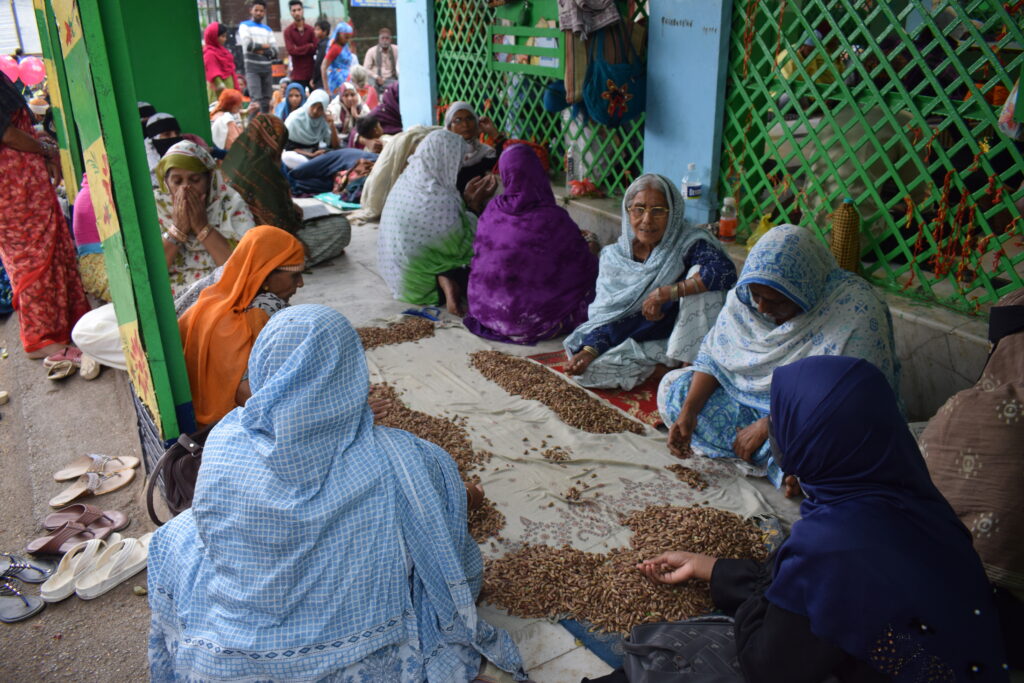
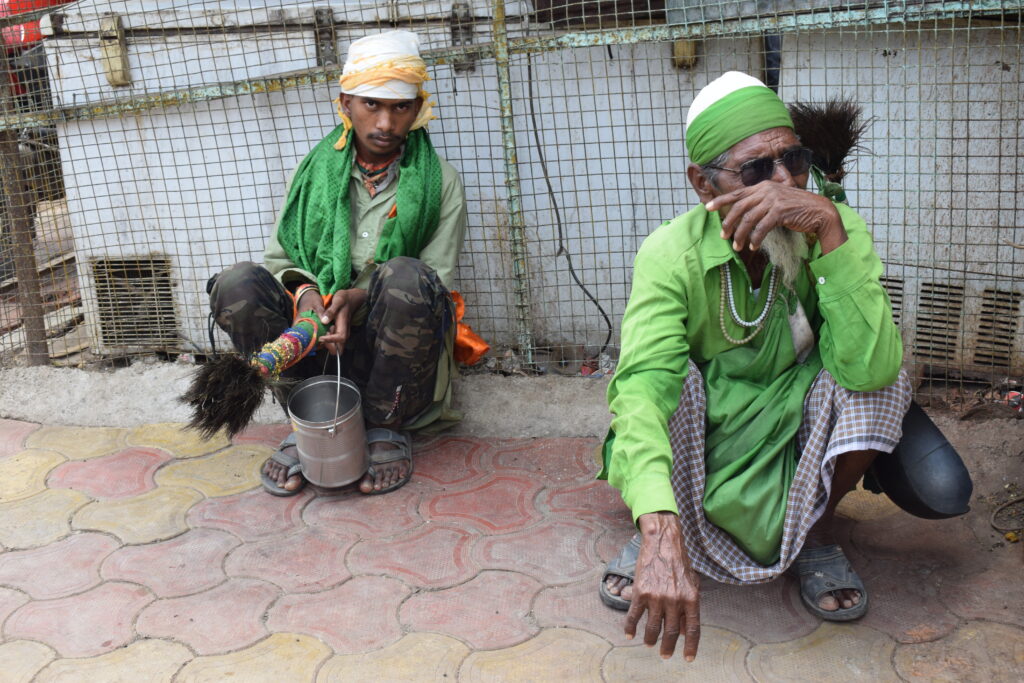
Political and moral support for the project has also helped allay suspicions. Gargi, the Maharashtra Congress Party president’s daughter and a sparkly 26-year-old dentist, has played a critical role in steering the project forward.
Three years ago, when the dentist set up the first medical camp at the shrine, she simply wanted to understand the vacuum in mental health delivery through community engagements. But as she got more involved, she noticed that unlike most hospitals where patients clammed up, here they were open and expressive.
“There’s a mediative quality to the whole listening process at the shrine,” says Gargi, who serves in underserved communities. “Patients are mostly from lower socio-economic backgrounds and they feel less judged than at hospitals.” Less judged — and heard.
Last year, Gargi launched an art-based therapy at the Sufi shrine to help patients vent their emotions, rebuild confidence, and potentially reduce violent tendencies through songs, games and other group activities.
Her father, the Maharashtra state Congress Party president Harshwardhan Sapkal who’d worked with Dabholkar’s father on his broader social movements for more than two decades, has also been actively supportive of the project.
“I like the humanistic approach to healing,” said Sapkal, who believes there are different ways to find connection to God. “There’s no interference with people’s faith, but we try to sensitize them about healing being a non-linear journey.”
Even after all the political backing and help from the shrine committee and local priests, Dabholkar says he regularly faces pushbacks from militant priests.
“This isn’t surprising,” he says, a composed smile flitting across his face. “My father was always targeted because he agitated against harmful superstitions and called out godmen who made profits off people’s misguided beliefs.”
Dabholkar remembers his father as a “spiritually gifted man” who drew many of his ideas from the thirteenth-century Warkari devotional movement of Maharashtra with saints emphasizing compassion, inclusion and tolerance. In 1989, Narendra Dabholkar founded the Maharashtra Andhashradhha Nirmoolan Samiti, or the Committee for the Eradication of Blind Faith, to campaign against superstitions and “miracle cures” by godmen.
As he worked among the masses and made attempts to get an anti-superstition law passed in the state of Maharashtra, the threats against him started mounting from militant Hindus who felt such a law would affect Hindu tradition.
In 2013, while out on his morning walk, Hindu extremists murdered his father.
“My father paid the price for challenging society’s religious dogmas,” says Dabholkar, who resolved to carry his father’s work forward after his tragic murder.
Though a rationalist, the older Dabholkar used to value spirituality for honing one’s moral character and often said during their family gatherings that spirituality was what one did after the prayers ended. Essentially, how do we live so that the community is the focus, rather than the individual? This is faith — of any kind — in action. What are we doing for the community, for the underprivileged, for the marginalized? This sacred-centering transcends specific faith traditions.
Dabholkar had tapped into his father’s spiritual compass in his early childhood and learnt how native wisdom could be used for the greater good of humanity from his maternal grandparents, who prayed and followed Hindu rituals daily.
These learnings remained with him throughout his early adult years and became particularly useful when he decided to immerse himself in community mental health work more than two decades ago. “I knew science was about challenging dogmas,” he says. “But I also learnt how dogmas in religion could be challenged while working at the grassroots level.”
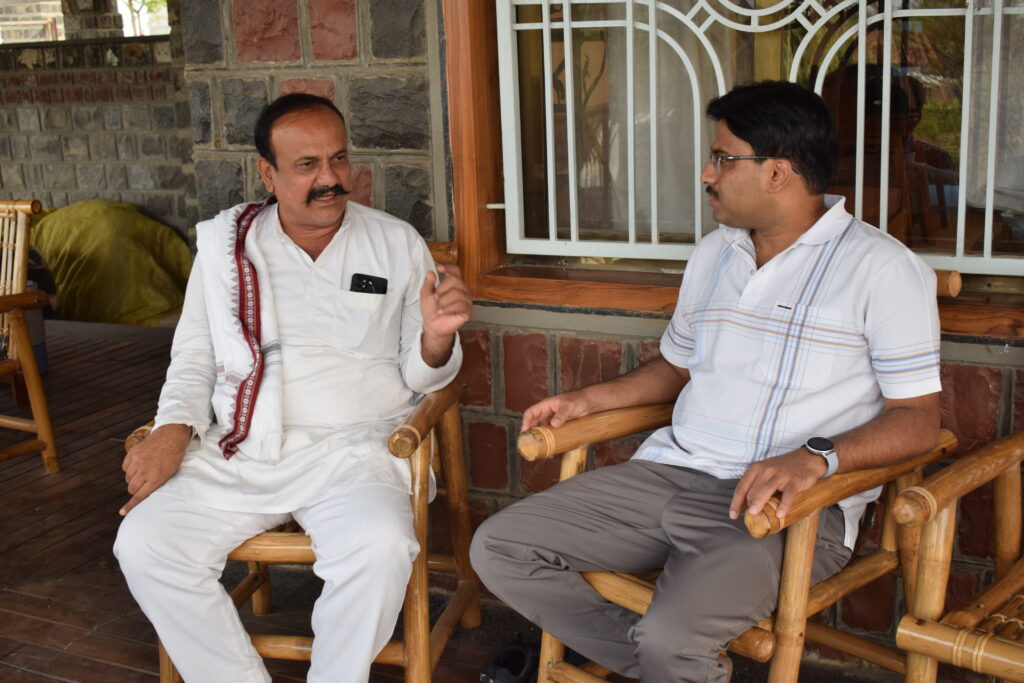
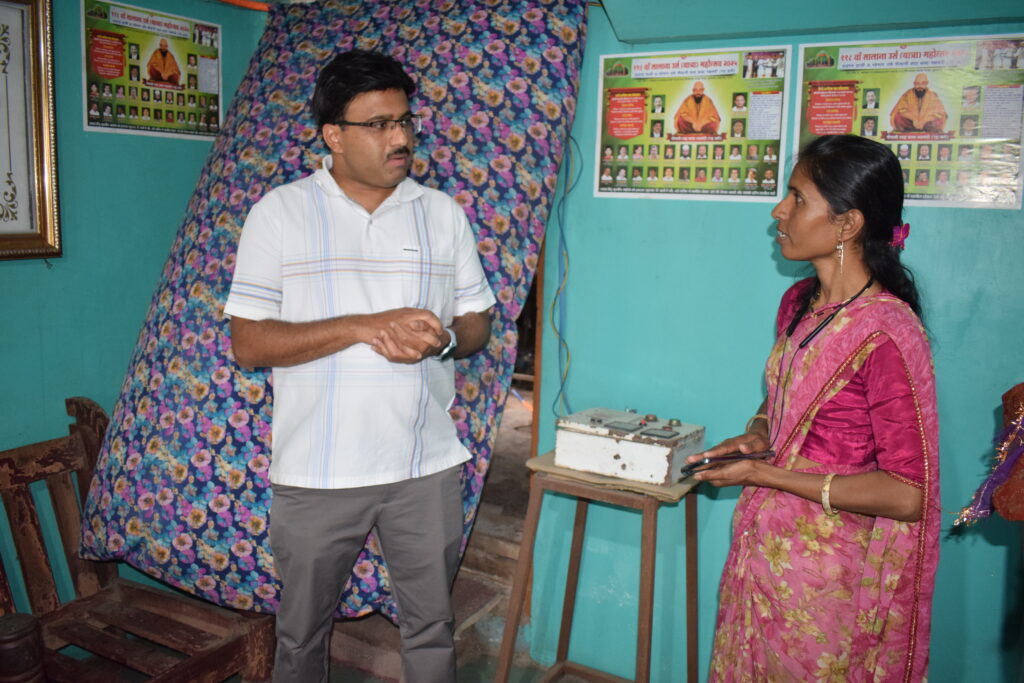
In 2012, Dabholkar joined his father on his superstition eradication campaigns at a small Sufi shrine in the Jalgaon district of Northern Maharashtra.
South of the Tapi River, on land gently undulating and rising toward the Ajanta Mountain range, the shrine of the Sufi saint Peer Musa Qadri Baba had been on his father’s radar for a few years. Thousands believe in its “miracle cures.”
Though known for fostering Hindu-Muslim unity and kinship through its vibrant fairs and worship practices during the annual Urs festival, Dabholkar noticed the acute psychological distress among devotees.
Hundreds of devotees, who had set up habitation around the shrine complex, were shuttling between self-styled ascetics with their own diagnostic systems and cures. Struck by the exploitation happening in the name of religion, the Dabholkars decided to counter it by setting up an outpatient facility to sensitize patients.
“Even though my father had built a movement around mental health by then,” Dabholkar remembers, “it was the first time we were approaching the linkages between mental health, superstition and religion in a more systematic way.” In a place where the mind fractures, it is often the spirit that seeks to repair. The Dabholkars found themselves working at this intersection of religion and science where compassion can be seen as sacred, propelled by respecting the dignity of every other being.
When the project got shelved after Covid, Dabholkar’s mind was made up. He would begin another program combining faith healing and medicine at the bigger and more popular shrine of Hazrat Abdul Rehman Shah in Buldhana.
Over the last 40 years, the shrine has seen a sharp rise in ritualistic practices. “It’s like faith healers are everywhere and we are just pawns in their hands,” said Nadeem Sheikh, a 35-year-old patient who walks with a slight limp.
Sheikh, who’s been taking antipsychotic medicines over the last couple of years, says it took a lot for him to agree on medication. For years, he had been trying to find a connection to the divine through the mediation of faith healers. Even now, Sheikh sometimes finds himself conflicted between faith and science.
“That’s why we first collude with the delusions to get the patient to sign up for treatment,” says Dabholkar. “It’s a philosophical position…in some cases when the patient starts feeling better, they stop going to fake godmen.”
Not one to take the traditional mental health approach, Dabholkar’s study of cultural epidemiology that investigates how cultural beliefs influence the way people experience and cope with illness has helped him work in the community.
“The health workers ask questions unlike most doctors,” said a patient who recently signed up to heal herself. “I now see that religious dogmas are ailments of the human mind, even a cultural way of adapting to a situation.”
This begs the question: what if supporting those living with a mental illness is just as much about supporting each other’s soul-deep needs — through sacred listening and witness, offering them dignity through presence?
To Dabholkar, giving people living with mental illness back their agency and helping those suffering find meaning in their lives have been his top priorities.
His father’s death, which promoted global discussions on religious superstition and its impact on society, has prompted him to become even more involved in popular faith through the prism of science.
“Religion and science needn’t have a dichotomous relationship,” Dabholkar said. “It’s all about the human being — their vulnerabilities, failings and struggles. We are just present for them and work with the sacred awareness that it’s for the greater good of humanity.”
By Priyadarshini Sen