Lakou Tanama: Faith-Inclusive Healing Spaces Supporting Haitians in Crisis

“I lost my only friend yesterday by suicide.”
It is September 17, 2025, and the woman speaking is one of twelve people gathered on a Zoom call. Some have their cameras on, others don’t. She continues: “A mother of two, only 29 years old. She said she felt desperation and humiliation. She lost her job and gave up. She had nothing left and knew that she couldn’t feed her kids.”
There’s a pause. Then: “Maybe if she knew about this Lakou, she could have held on.”
She is referring to Lakou Tanama, a mental health initiative and community programm based in Port-au-Prince, Haiti, which – in partnership with US organization Church World Service (CWS) – has been holding faith-inclusive Healing Spaces to support the mental wellbeing of Haitians living in the United States, and training facilitators to do so as well, in Haitian Creole (or Kreyòl).
Nadége Robertson, co-creator of Lakou Tanama and Executive Director of Fondation Espoir, has lived in Haiti for almost 30 years after moving there from the US. She is facilitating this healing space from her home outside Port-au-Prince. Lately, the stories have gotten darker. People who fled Haiti seeking safety in the United States are now describing total despair. With the Temporary Protected Status for 500,000 Haitians living in America ending in February and benefit programs under threat, the promises that brought them to America are collapsing.
The stories pour out in the healing spaces that Lakou Tanama facilitates. Someone describes running from thugs in Haiti with two kids, only to find “total loneliness, despair, stress, depression” in the United States. In their testimonials, participants say they are thinking of suicide and are glad to be in the session because they “have no one to talk to.”
In just one of the calls, multiple people shared about recent, frequent suicidal ideation. The need for these spaces became undeniable.
Over the past six years, Haiti has endured unprecedented violence and instability. As of October 2025, over 1.4 million Haitians have been forcibly displaced. Those who made it to the United States took out loans, sold possessions, and left families behind. They arrived with hope and determination. With the imminent threat of removal back to Haiti and a surge in dehumanizing political rhetoric, hope is unraveling. People are talking openly about wanting to give up, to die. This is the crisis that Lakou Tanama is responding to.
Mental health services that follow a secular approach towards mental well-being aren’t reaching these communities. “The reality is that most mental health programs don’t benefit the Haitian community because they were never designed with them in mind,” explains Alex Morse, Deputy Regional Representative for Latin America and the Caribbean at Church World Service (CWS).
For the Haitian community facing crisis, mental health support that ignores or diminishes faith won’t work. In some cases, spirituality is pathologized, framed as a barrier rather than a source of strength, leaving individuals feeling unseen, judged, and further marginalized in their healing journeys.
When Church World Service and its partners began exploring mental health support for Haitians, they faced a crucial choice about how the program should be conducted. “We spent a lot of time wondering whether this should be a faith-neutral program, or should this be a faith-inclusive program?” Alex recalls. The easier route would have been faith-neutral, sidestepping the complications of engaging with diverse spiritual practices, especially Vodou.
But their Country representative in Haiti pushed back, recognizing that if this was going to contribute towards future peace and reconciliation processes, there should be ways to create spaces where evangelical Christians, Catholics, Vodouisants, and others come together because these are issues that affect the whole community.
This approach may seem radical compared to the ‘secular’ way Western psychology or healing practices are often presented. However, Dr. Evan Auguste, a clinical and forensic psychologist and co-creator of Lakou Tanama, says that the idea of Western psychology and Western mental health as absent of faith or spirit is called into question when you look at how these concepts were developed in the first place: “When people talk about Western psychology, they say it’s an agnostic, secular form of engaging purely with the mind. And yet, when you look at the theoretical paradigms and the foundations of paradigms, a lot of them are pulling from distinct spiritual traditions.”
Take mindfulness-based therapies, he points out. They’re drawn from Buddhism, even if that’s rarely acknowledged. Dialectical Behavioral Therapy (DBT) creator and American psychologist Marsha Linehan has said it came from divine inspiration. Freud engaged deeply with ancient Egyptian beliefs. Carl Jung pulled from Bantu spiritual philosophies for his concept of the collective unconscious. “Psychology is being dishonest about its own history when it comes to how we do and how we understand intervention,” Dr. Auguste argues.
When one participant’s father passed away, he was unable to return his father’s body to the land where the family had planted a tree over his buried placenta – a sacred Haitian tradition. “He shared that he had that sense of loss, and then there wasn’t even anyone to be mad at about it,” recalls Alex. “He asked, ‘Who can I even be mad at? French colonialists who have been dead for 200 years? I have these feelings, and I don’t know where to place them, I don’t know what to do with them, and I don’t know how to resolve them’”.
Nadége puts it plainly: “Haitians carry all that joy gives them hope, and it is based on their spirituality. It is based on faith. Circles or spaces like the ones Lakou Tanama is offering give access to people in their own language to say, yes, it’s my faith that keeps me going, however you define that faith.”
The isolation is particularly acute. “The language I was hearing was a kind of desperation I’d never heard,” says Nadége.
“Lakou” is a Haitian Creole word for a central courtyard where families and neighbors gather. Historically, the Lakou emerged in the late 19th century as rural Haitian communities resisted oppressive capitalist conditions imposed by European colonists. “Tanama” comes from the Taíno word for butterfly–representing transformation, cycles of life, and connection to ancestral wisdom.
The circle is open to all practices, even to those who don’t follow a specific belief system. “I’ve had people in circle who are perhaps atheist or agnostic, and I tell them: call on your highest self, or whatever it is that you align with, what is the most expansive sense of truth to you, call on that,” says Nadége.
For about a year, Nadége and Dr. Auguste met regularly to co-develop the model. They pulled in elders from the Association of Black Psychologists. They studied the history of Haitian healing, particularly the work of Dr. Louis Mars, Haiti’s first psychiatrist. They interviewed elders about how history had impacted them, finding patterns of disconnection from land, from spirit and culture, from community and politics, from self. Their approach is also informed by research on community-based healing practices and consultation with experts in faith-inclusive mental health strategies, adding rigor to their model development.
“A lot of my scholarship is psychohistorical,” Dr. Auguste says. “I want to tie into the history of Haitian healing that had been invented and proliferated within Haiti. We took this historic approach to make sure our model was drawing from Haitian lineages of healing while also incorporating some of the African-centered models that have significant research done on them to meet the moment.”
Two weeks after they finalized their curriculum at the start of August, the program agreement was signed, and recruitment began. In just 20 days, Lakou Tanama and CWS trained 27 frontline staff from 15 different organizations across seven states. These are people who work directly with Haitian entrants and now have the tools to facilitate healing spaces in their own communities. Participants found the sessions to be so helpful that an evaluation found respondents wanted access to two to four Healing Spaces per month – and had more than 15 friends in similar circumstances to refer to the program.
The speed was necessary. “The humanitarian protections that are available for Haitians living in the US right now end February 3,” Alex explains.
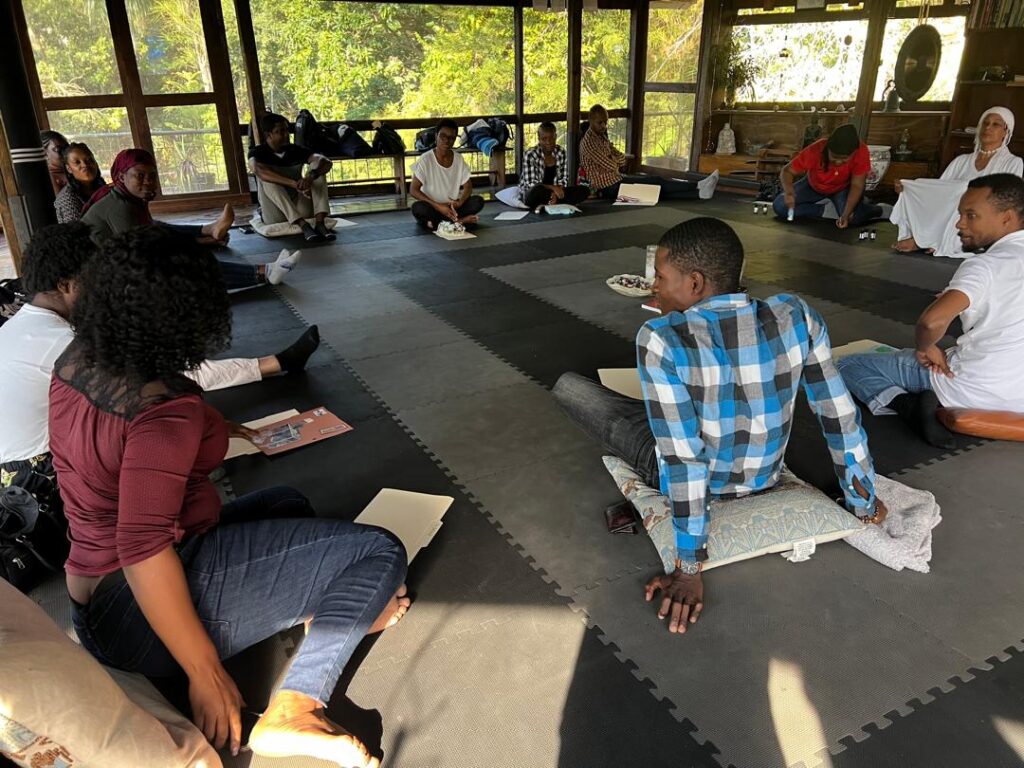
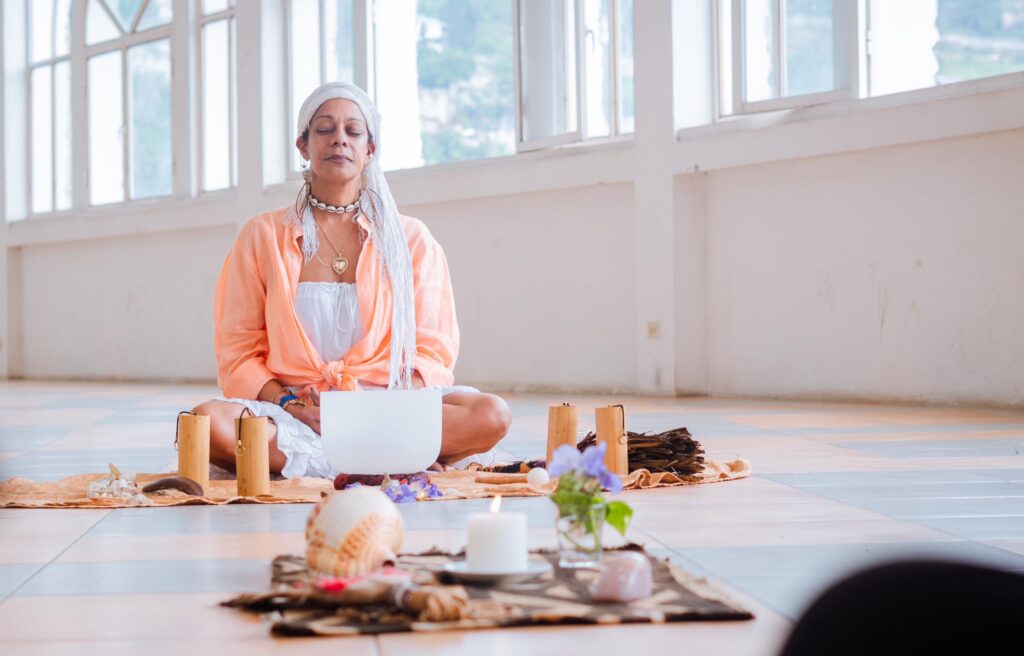
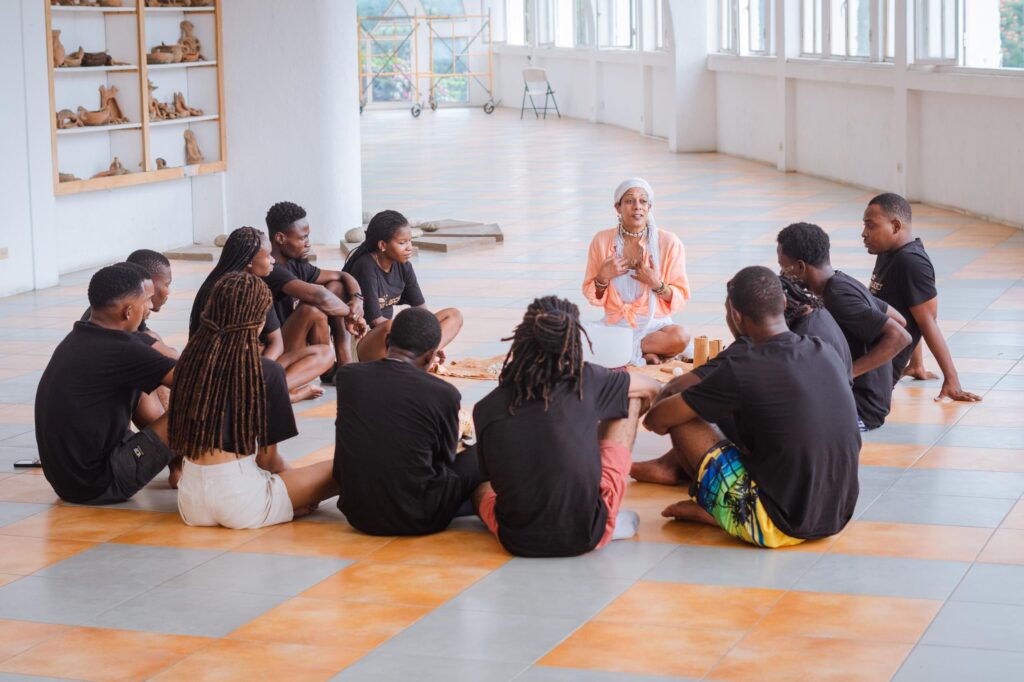
The sessions themselves are carefully designed to feel organic and open. Nadége typically opens with a prayer or a psalm, something that feels right for the group. Participants can use fake names if they want. They can keep their cameras off. They participate as much or as little as they feel safe.
At the center of the circle – even virtually – there’s usually a candle. “At the core, it’s elemental,” Nadége explains. “Because no matter what your spiritual belief is, you can usually wrap your head around earth, air, wind, and fire. How can you use paradigms? How can you use systems and elements to open a conversation? So, no matter what your belief system, you can share.”
Dr. Auguste describes what he saw in the early circles: “A lot of just relief. People just looking for spaces to see and to be seen.”
A talking piece moves through the circle. The facilitator’s job is mainly to wait – to resist the urge to fill silence, to let people find their own readiness to speak. That readiness has come in unexpected ways. Nadége describes participants who are unwilling to leave the circle even when they are literally running from dangerous situations. “We tell them, get off the phone, and they say we’re not missing this circle, while they are running.”
Nadége didn’t expect the circles to work as powerfully as they have, especially for Haitians in the United States. “I could not have fathomed that the circles that I kind of conceived mostly for the island would have this resonance. How impactful it is in crisis moments. Some people think, What can a circle do in a crisis? It does way more than people think.”
And at the end of sessions, people name what they’ve found: “Here we find some hope and healing, even if we know it’s not going to change right now. Jodia Nou jwen healing dan Lakou a. Today, we found healing in this courtyard.”
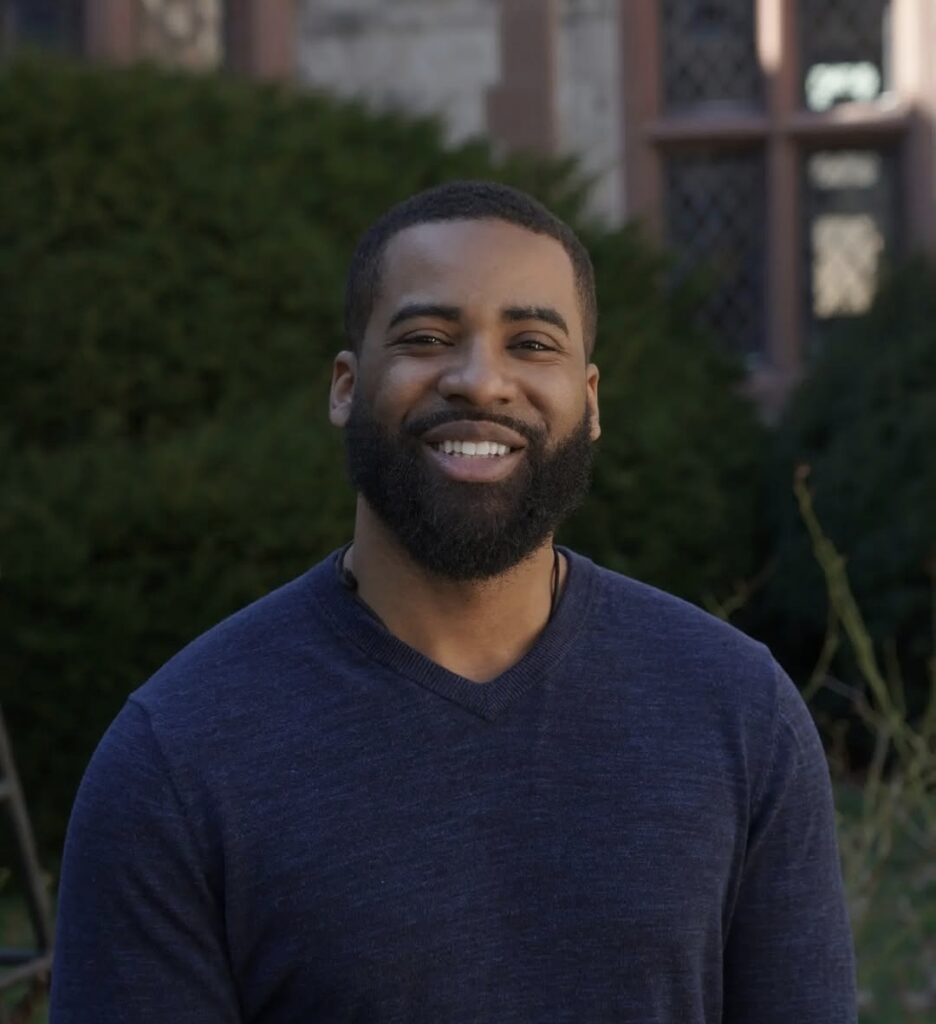
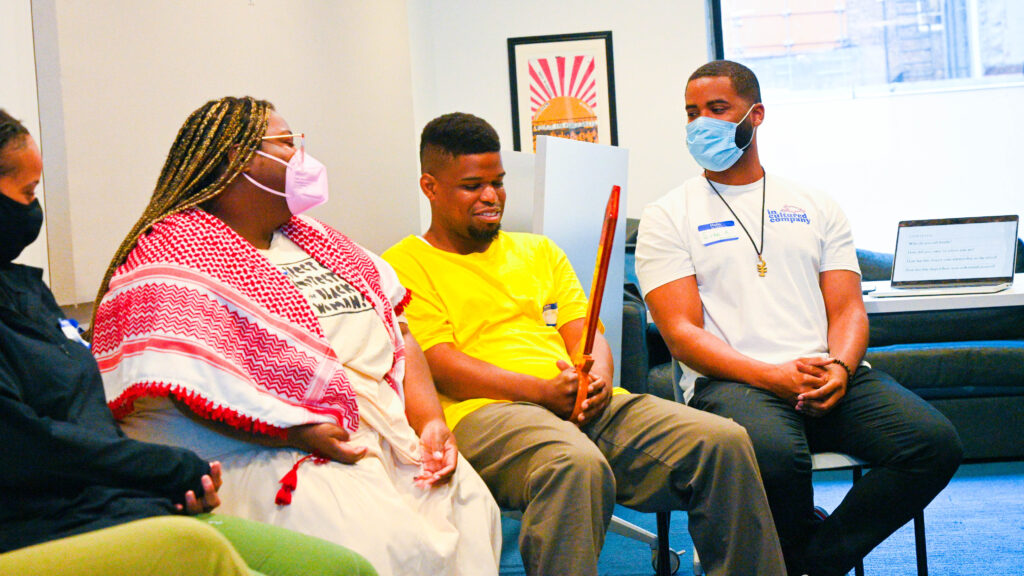
Word is spreading fast. People who’ve never participated are calling to ask about the next session and how to join. The work is also expanding in multiple directions. CWS is developing an emergency fund to help with immediate material needs – rent, groceries, and legal services. “We’re working on developing a short-term emergency fund that we can use to respond to those crises that people are in,” Alex explains, “recognizing that emotional well-being is critical, but it’s not sufficient in a lot of cases if people have other immediate needs.”
The most ambitious idea is starting to come to life: Haitian facilitators based in Haiti leading virtual healing spaces for Haitians in the United States. Nadége has already trained about 30 facilitators based in Haiti and this virtual team will be able to start offering over 75 virtual healing spaces per month.
Dr. Auguste adds: “We’re experiencing this is almost rolling faster than I think Nadége even knew. I was surprised at how quickly it took on. Almost every circle we’re moving through all these different levels of individual-based trauma, historical disconnection, spiritual shame and fear, state-based insecurity. People are moving through it all.”
Despite the pace of expansion, Lakou Tanama and CWS continue to be committed to quality and putting safeguard in place for participants at risk of deportation and potentially in crisis.
The circles do more than process pain. They challenge the stories people have been told, confront myths about mental health and Haitian history. “You sit in a circle to heal, but you also sit in a circle to strategize,” Nadége reminds people. The circles create space to examine the systems that perpetuate pain and to figure out what to do about them.
The vision extends beyond February 3rd. The partners hope to continue the healing spaces virtually, so that when families and individuals are deported back to Haiti or to other third countries, they will not have an interruption in their access to those emotional support groups. “They would be able to continue to see the same familiar faces, participate in the same kind of dynamic that they’re familiar with. Maybe there’s some sense of continuity or some sense of normalcy in the midst of what’s likely going to be a really challenging situation,” says Alex.
That vision also includes a response team in the port city of Cap-Haïtien to receive deportees and offer in-person healing spaces upon arrival, along with emergency cash assistance and bus vouchers, which will be prioritized. If they don’t have places to go, maybe temporary shelters coordinated with churches.
Other organizations are starting to join in this vision. Haiti Health Network is working in coordination to train community mental health workers in Haiti and other agencies working with recent Haitian entrants in the US are starting to promote the healing space model. In Cultured Company does critical work with Haitians and Dominican diasporas in the U.S. and has become an important collaborator.
In a moment when Haitian people are being told they’re not wanted, that their lives don’t matter, that their faith is superstition and their culture is backward – Lakou Tanama tells them: You belong. Your story matters. Your healing matters. And we will hold space for all of you.
As the woman grieving her friend who died by suicide said, “Maybe if she knew about this Lakou, she could have held on. The Lakou is a family. I did not know a place like this existed.”
The circles are expanding, and people are finding, in virtual courtyards based on contemporary needs and ancient traditions, that they are not alone, that their faith and their healing aren’t separate. That speaking their language, practicing their spirituality, carrying their grief, honoring their ancestors, and still finding joy – all of it can exist together in one space.
As one participant from Haiti put it: “We must continue to do right by our ancestral land. Even in the diaspora, many long to go home. Lakay se lakay: home is home.”
Return to the Spiritual Solutions Library.